










Global - Engilsh


Why Does My AC Unit Smell? Common Split Air Conditioner Odors & How to Fix Them
During hot seasons, a split air conditioner is essential for indoor comfort. But many homeowners notice a frustrating issue: cool air starts flowing, then an unpleasant smell fills the room. This affects comfort and can also signal hygiene issues or mechanical problems inside the unit.
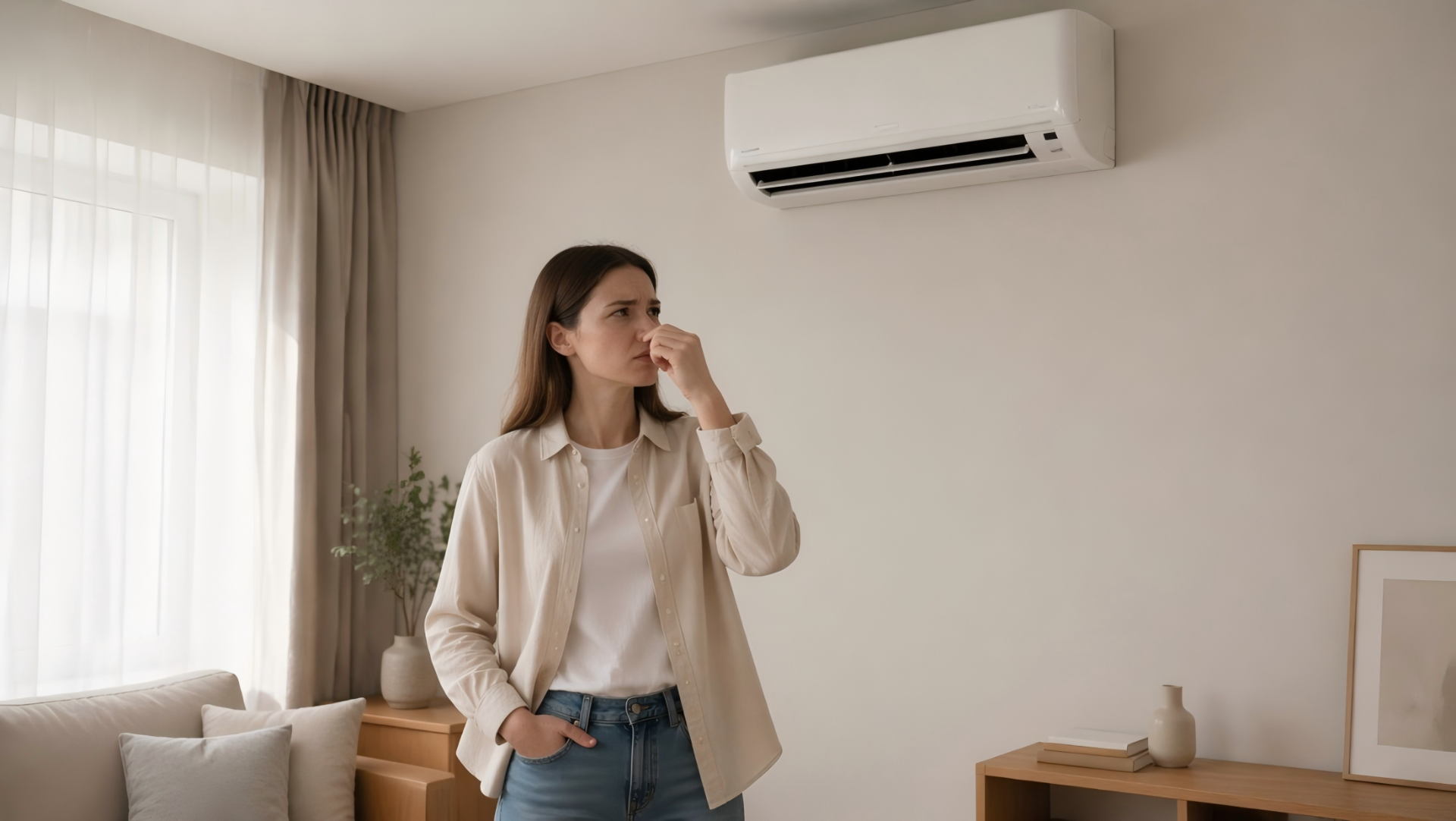
Why does my ac unit smell? In reality, this is one of the most common complaints from split systems users. Whether your ac smells when turned on or keeps releasing odors during operation, your indoor unit likely needs proper inspection or cleaning.
There are several causes of aircon odor. If you are asking, “Why does my aircon smell bad?” or “Why does my air conditioning smell weird?”, the odor profile usually gives the first clue. Many common air conditioner problems include ac smells musty from moisture around the evaporator, ac smells sour from drainage or chemical buildup, and warning signs like air conditioner smells fishy or ac smells like gas. Understanding why air conditioner air smells bad helps you decide when to clean aircon and protects both air quality and system safety.
Common Split Air Conditioner Odors (Causes, Risks, and Fixes)
AC Smells Musty
A musty smell often appears when the AC runs for long periods without proper drying or cleaning. The air may smell like a damp cloth, an old basement, or mildew.
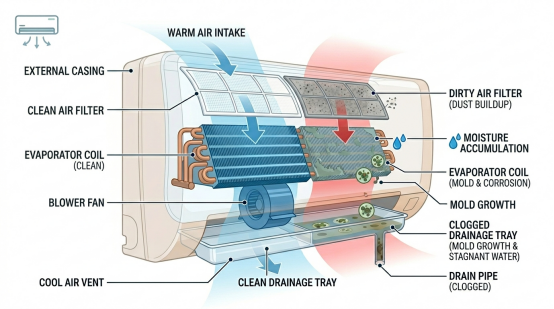
This usually happens when moisture accumulates on evaporator fins or inside air filters. Over time, dust plus high humidity creates ideal conditions for mold and bacteria, especially in rainy weather or during frequent cooling cycles. If condensate cannot drain smoothly from the drain pan, standing water quickly becomes a breeding ground for fungi.
How to fix:
- Clean or replace air filters regularly.
- Run Fan Mode for 20–30 minutes after cooling before shutdown to dry internal moisture.
- Make sure the drainage path is clear and the drain pan is level.
- If odors keep returning, schedule professional deep cleaning of the indoor unit, including coil-safe chemical cleaning.
AC Smells Sour
A sour smell is often similar to spoiled food or vinegar. This ac smells sour issue is becoming more common in modern inverter split systems, and the odor can be strongest right after startup.
This odor is often linked to hydrophilic coating behavior on evaporator fins or to volatile organic compounds (VOCs) in the room, such as cleaning products or perfume. If the coating has not fully stabilized, or reacts with perfume, sprays, or cooking residue, acidic volatile compounds may be released. Organic residue trapped in dark, humid internal areas can also decay and produce a fermented sour odor.
How to fix:
- Improve indoor ventilation to lower VOC concentration.
- Avoid spraying strong perfume or chemicals near the AC return inlet.
- Use a pH-neutral professional cleaner for evaporator fins.
- Check for organic debris or small insects that may have entered and decomposed inside the unit.
AC Smells Like Gas or Fishy (Warning Signs)
A fishy or gas-like smell is usually a serious warning sign. If you are asking, “Is a smelly air conditioner dangerous?”, the answer for these specific odors is often yes.
In new units, a light fishy smell can come from normal off-gassing of plastic components. In older units, it may indicate overheating electrical parts or melting insulation. If your ac smells like gas, it is rarely a direct refrigerant leak, most modern refrigerants are nearly odorless. More often, it points to compressor-related issues, degraded compressor oil, or burned circuit components producing a sharp chemical smell.
How to fix:
- Emergency step: Turn off the AC immediately and cut power.
- Do not restart the system, as this may trigger electrical fire or severe compressor damage.
- Contact a certified HVAC technician for urgent inspection of wiring, capacitors, and compressor condition.
- For brand-new units with a mild plastic smell, keep the room ventilated for several days.
Other Common Air Conditioner Odors and Related Components (Quick Diagnosis Guide)
Besides the three major odor categories above, your AC may also produce these specific smells:
| Odor Type | Odor Description | Potential Cause Analysis | Key Affected Components |
|---|---|---|---|
| Pungent (Sweaty Feet) | Similar to sweat or dirty socks | Body oils and skin particles are drawn into the unit, then degrade within the biofilm on the filter and fan components | Air filter, cross-flow fan, internal corners |
| Sewer Gas | Sulfur, rotten egg, or sewage smell | The drain pipe is not equipped with a water trap and is directly connected to the floor drain/sewer, resulting in sewer gas backflow | Drainage system, condensate outlet |
| Rotten Animal Odor | Strong putrid decaying smell | Creatures such as geckos, rodents, or insects have entered the unit, died and decomposed inside | Indoor unit base, drain line area |
| Chemical Odor | Disinfectant-like, irritating chemical smell | Excess cleaning agent residue, or corrosive reaction between strong cleaning agents and metal fins | Evaporator surface, supply air louvers |
Daily Maintenance Tips to Reduce Air Conditioner Smell
If you want to stay ahead of AC odors, deep cleaning alone is not enough. A few daily habits can help stop smells at the source:
- Use Dry Mode on humid days to reduce indoor moisture and limit condensate buildup inside the unit.
- Keep temperature stable around 24°C to 26°C. Extreme low settings can increase temperature swings after shutdown, which raises internal condensation and odor risk.
- If your drain hose is inserted into an indoor floor drain, pour water into that drain regularly to maintain the trap seal and block sewer backflow.
- Leave enough ventilation space around the indoor unit. Do not stack objects above it or block airflow with tall furniture.
Air Conditioner Odor Prevention: AUX Self-Cleaning Technology
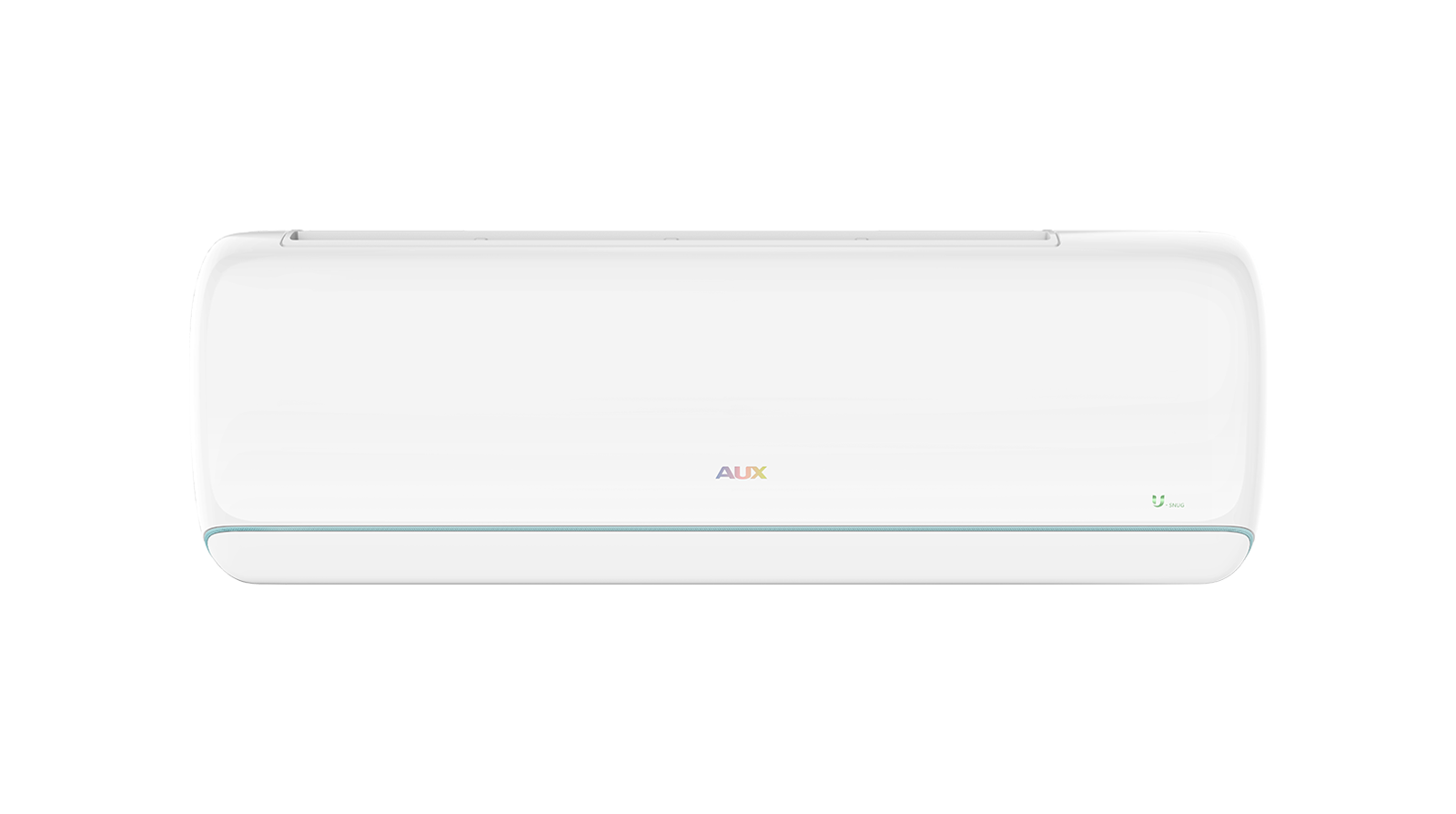
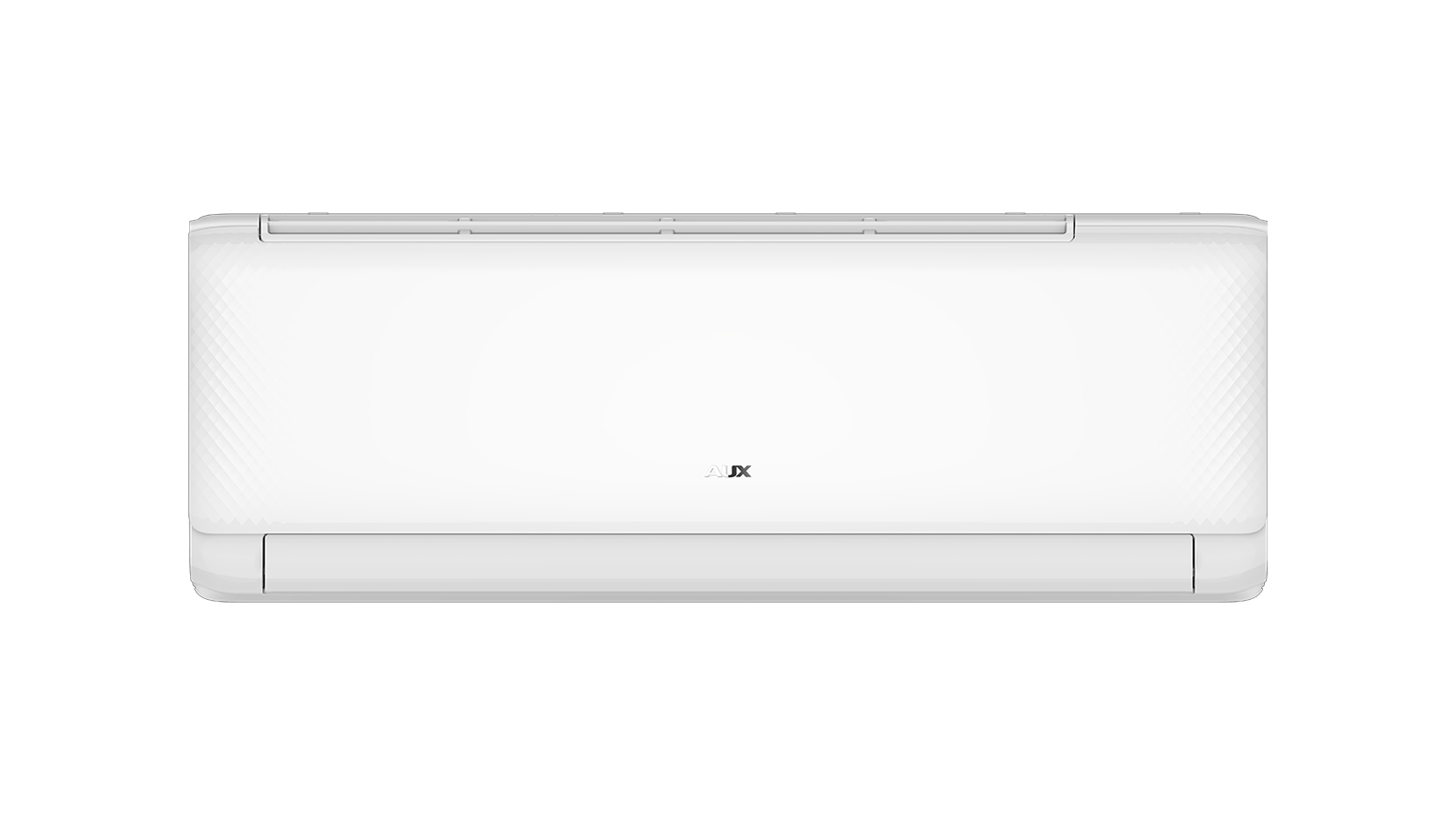
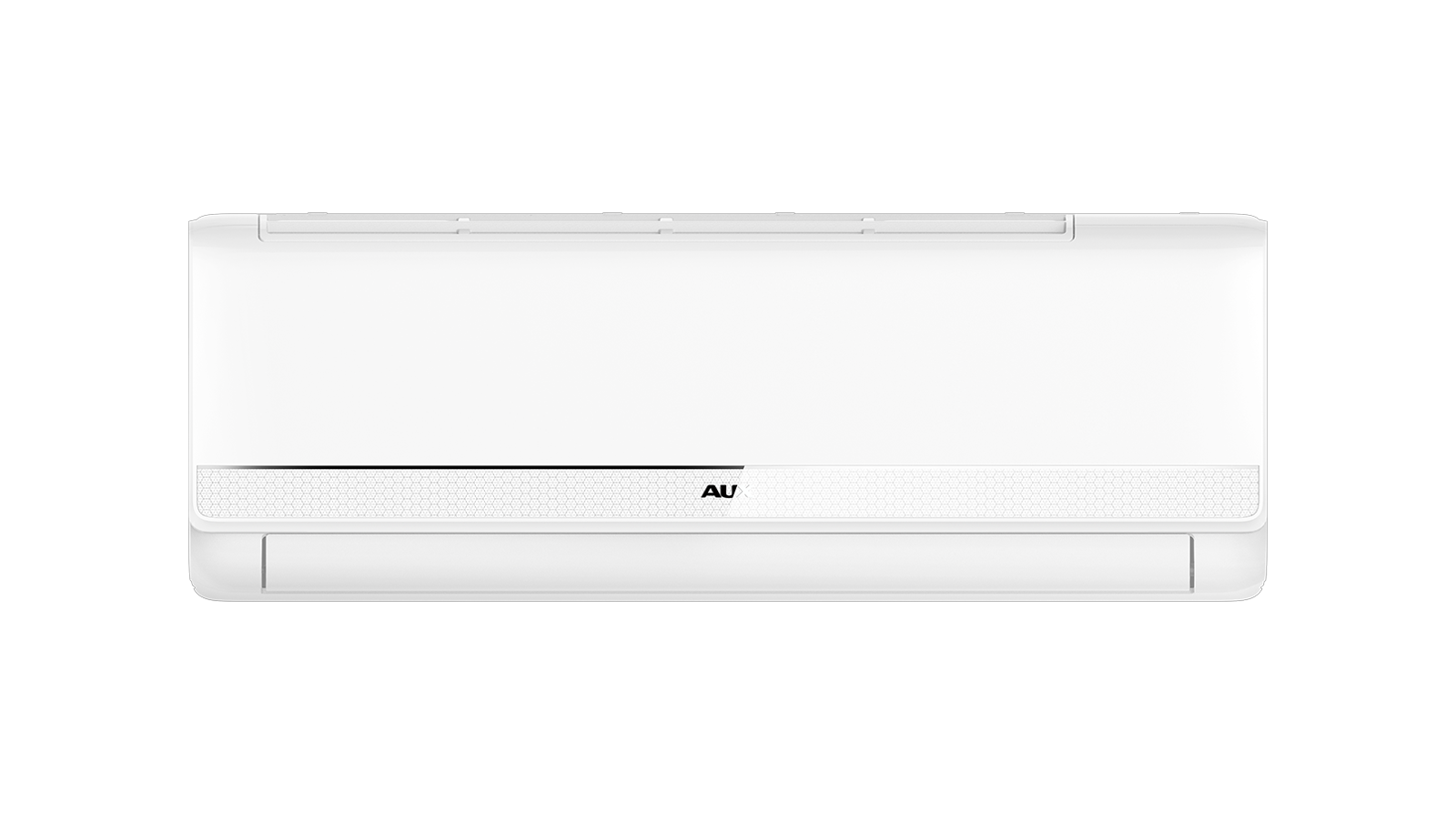
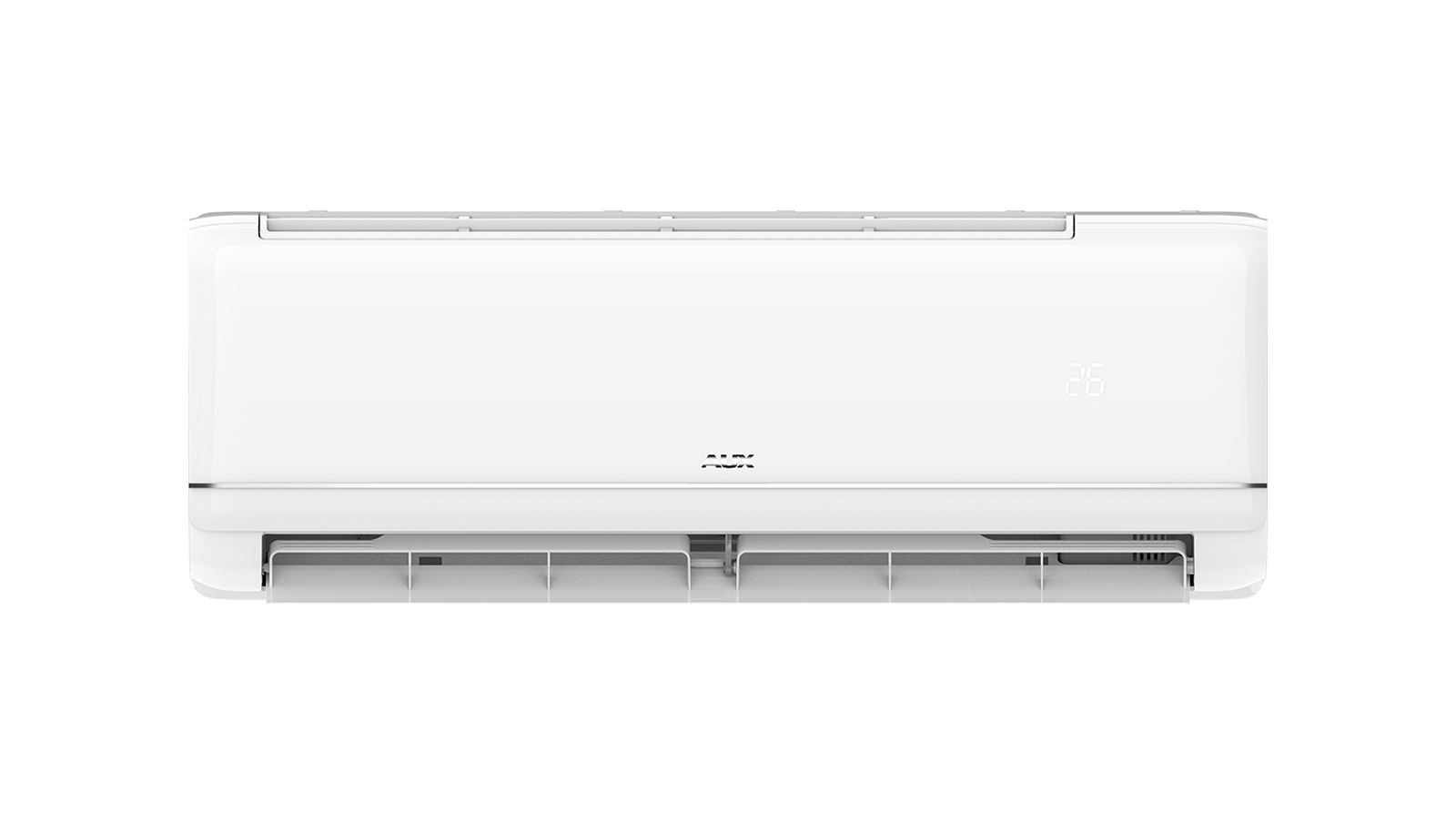
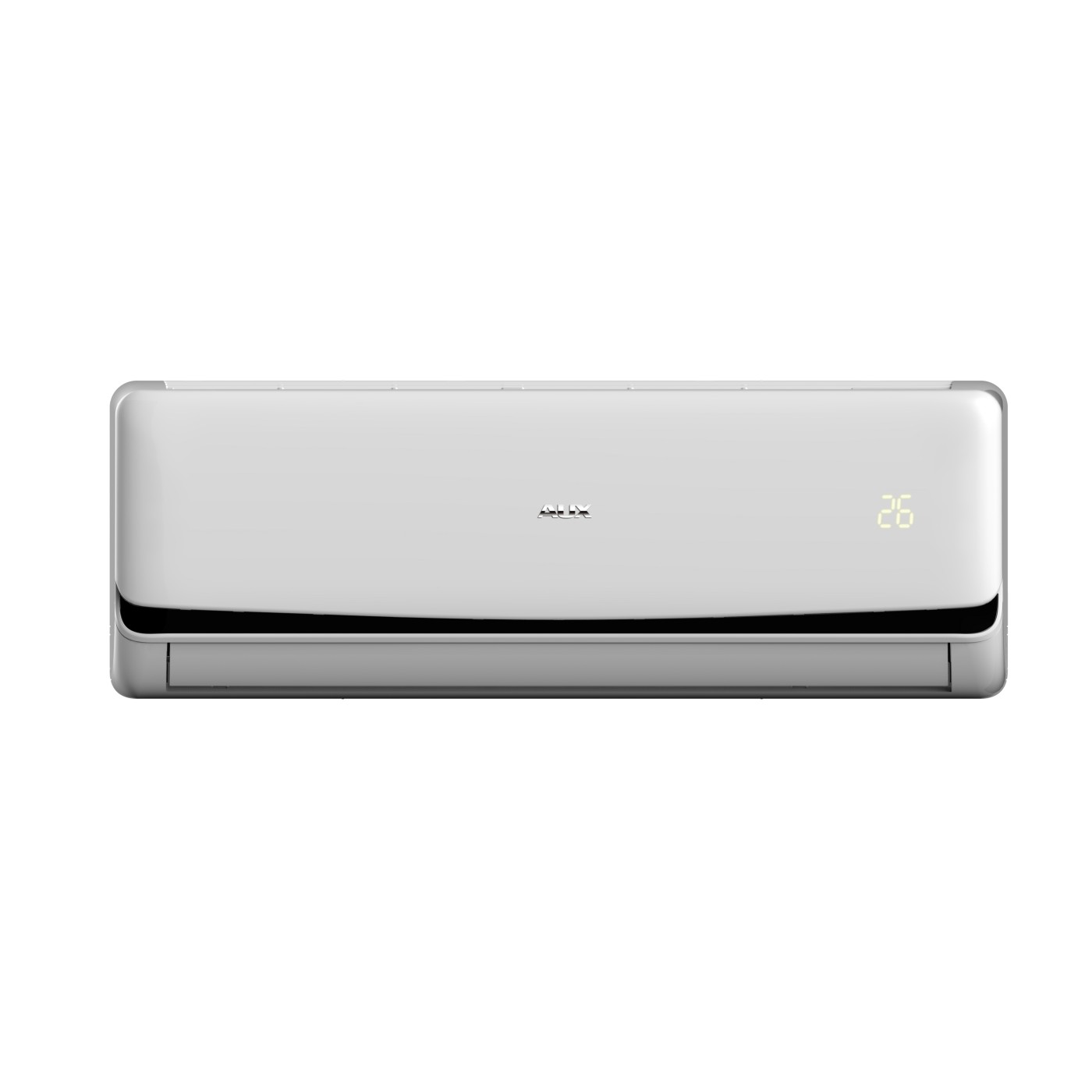
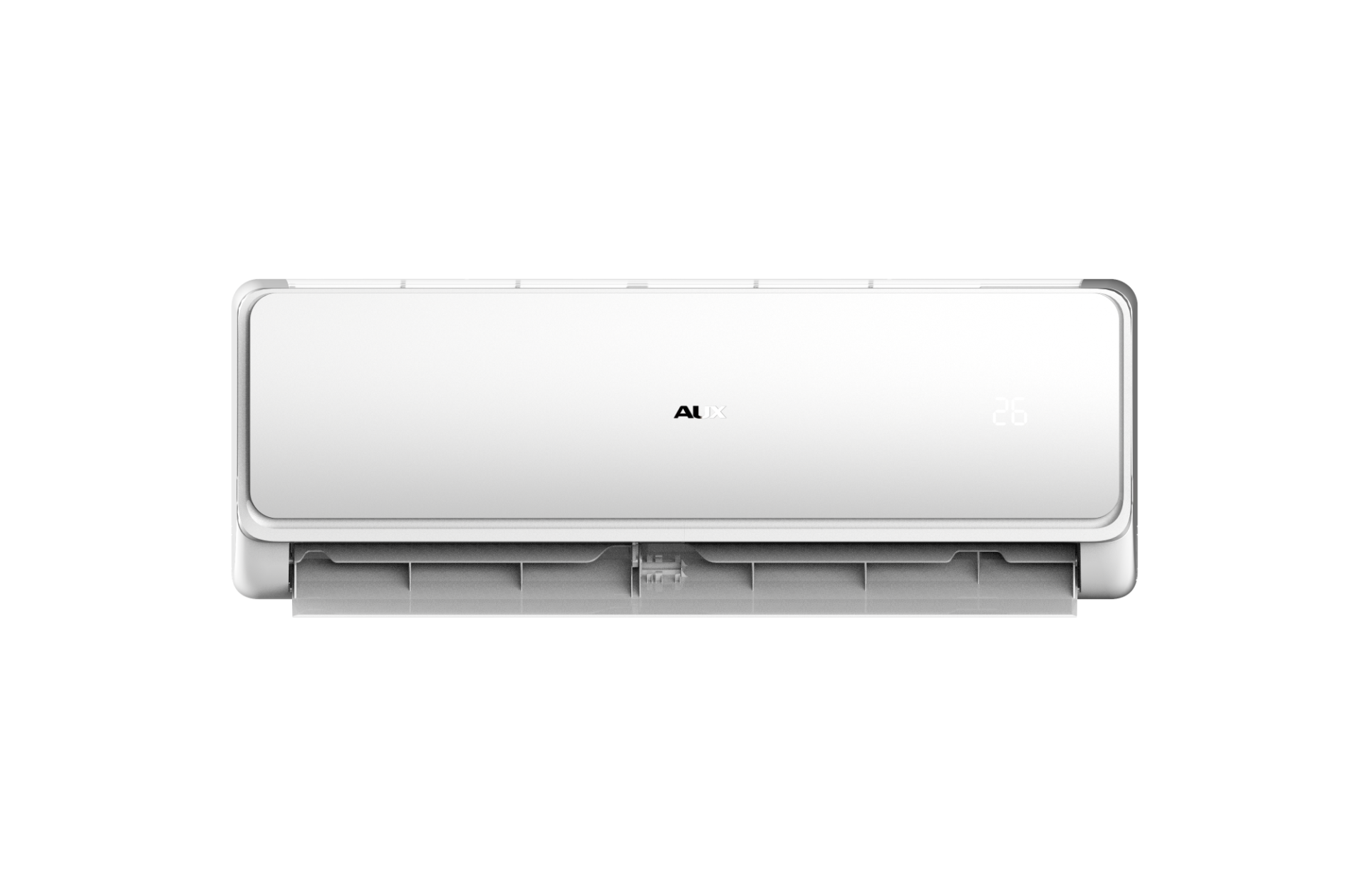
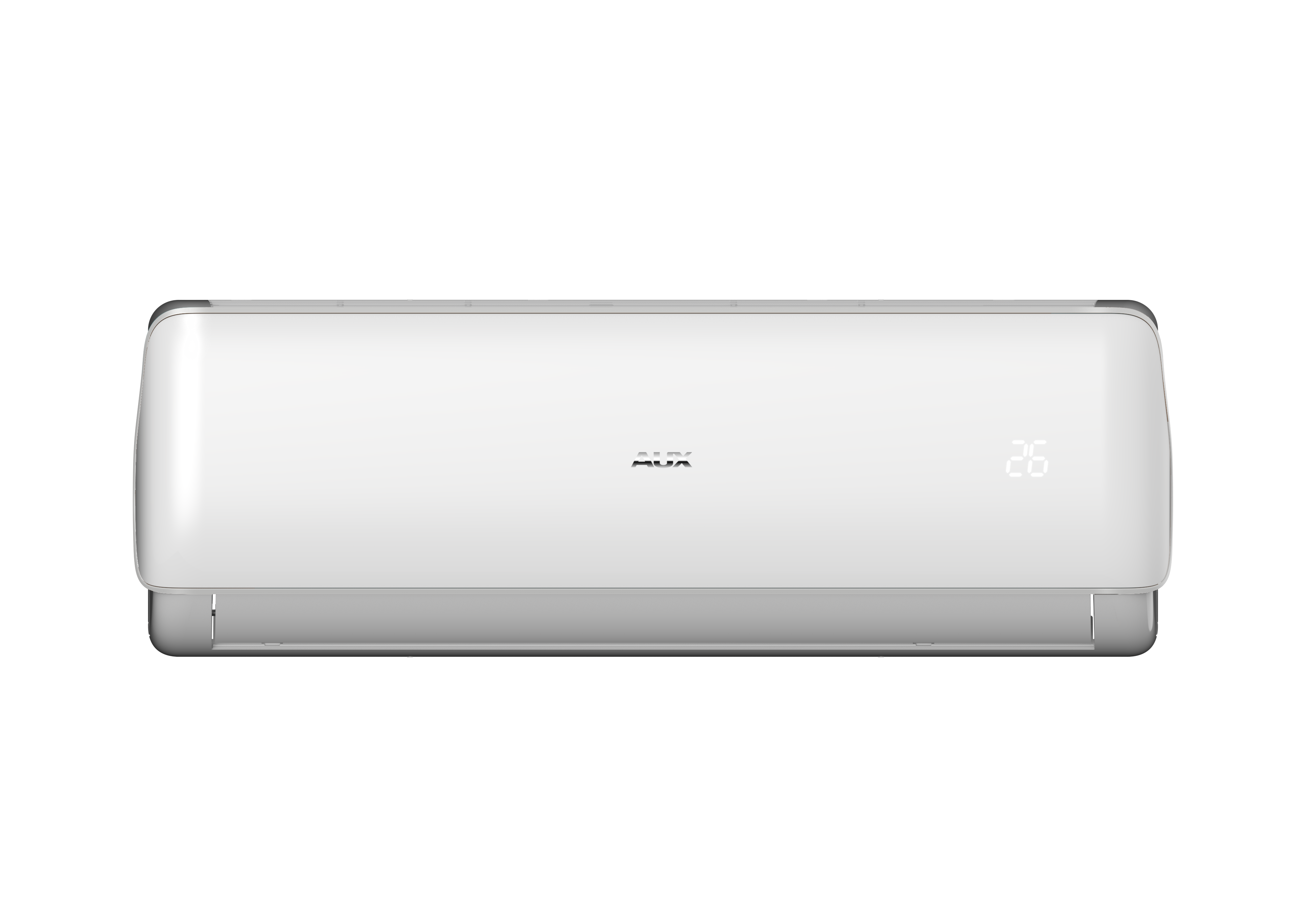
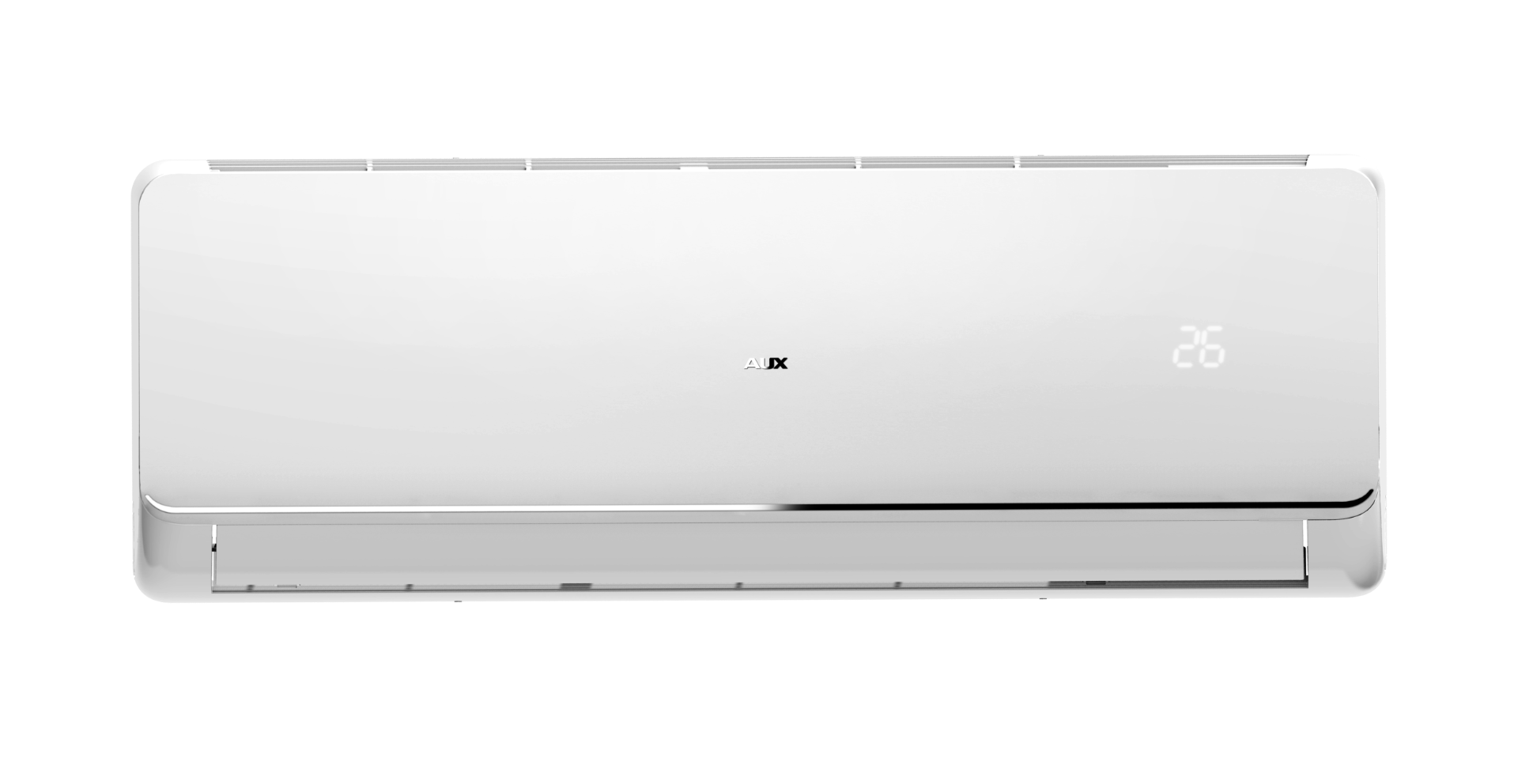
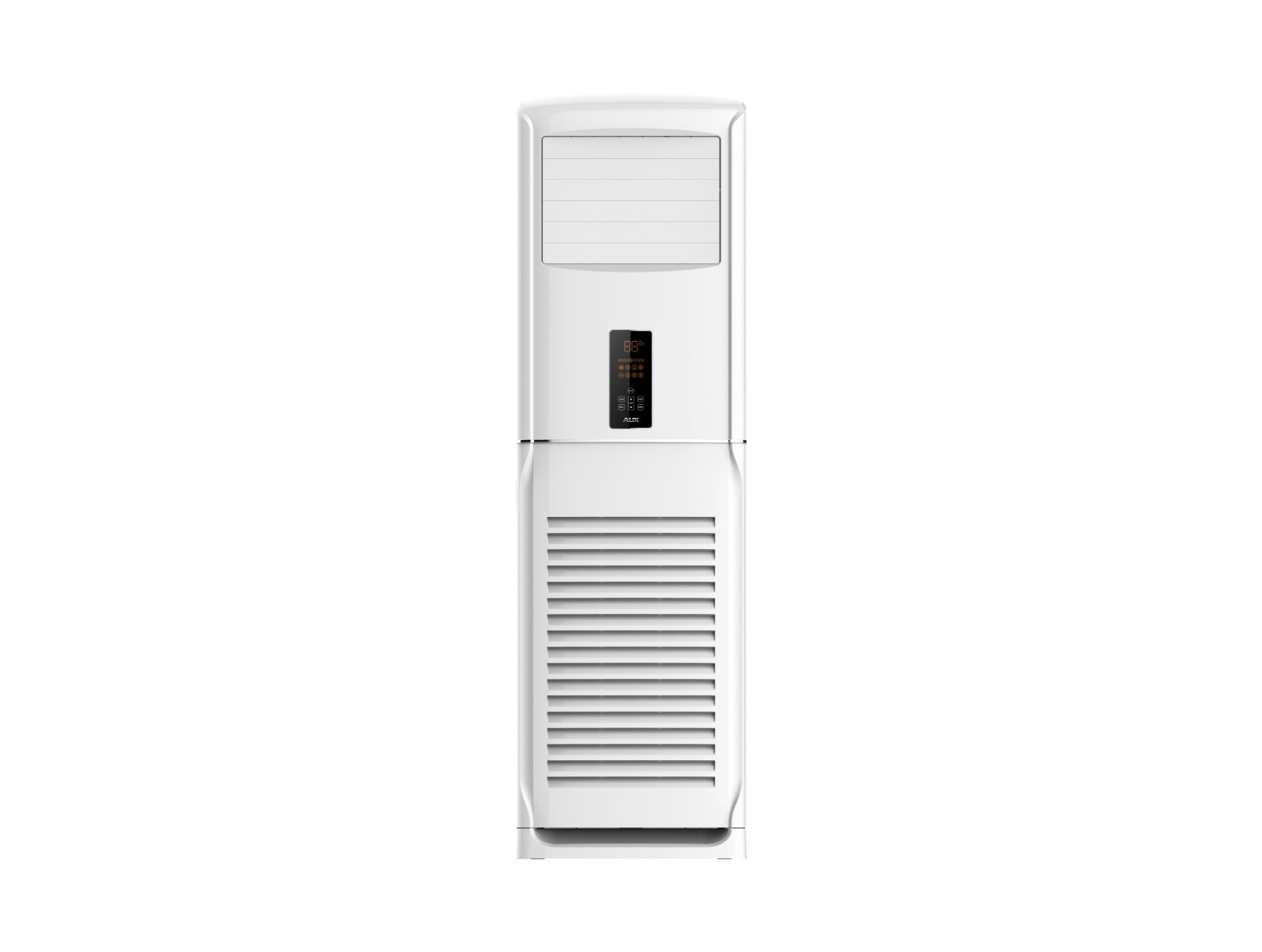
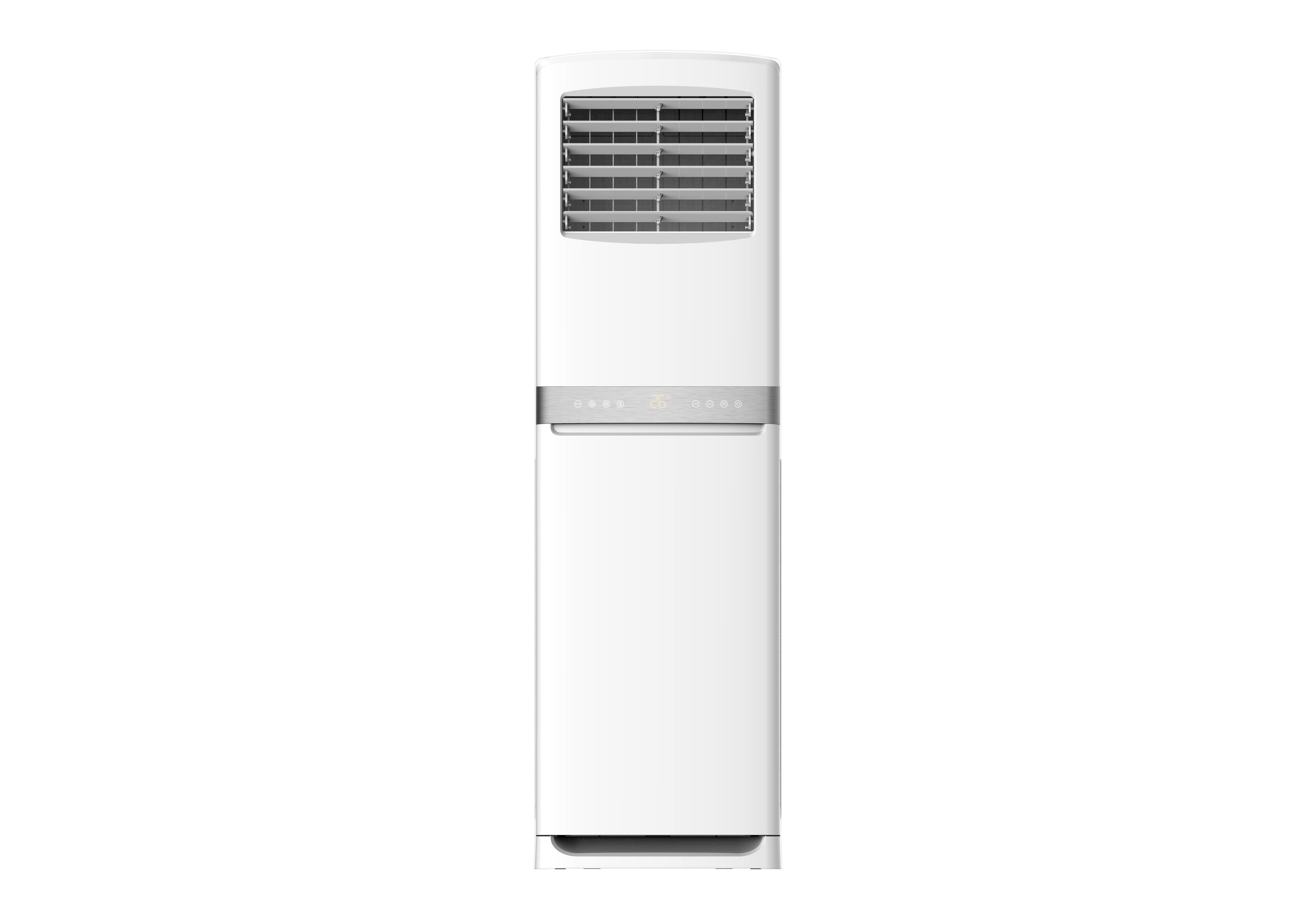
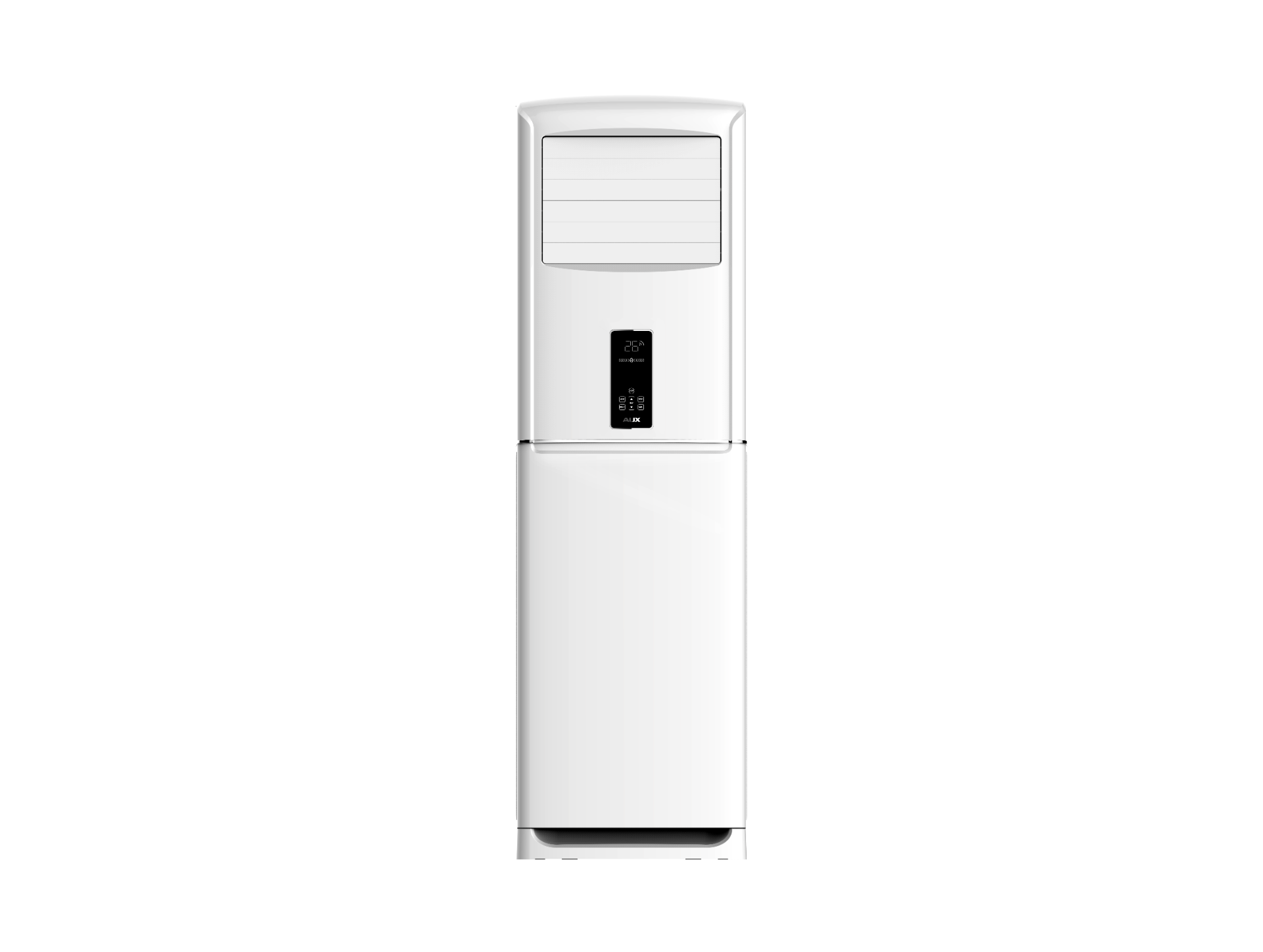
To reduce odor formation, AUX air conditioners use multi-dimensional self-cleaning design to reduce internal moisture and dirt buildup.
- Dual self-cleaning for IDU & ODU: The system covers both indoor and outdoor units. Through frosting and defrosting cycles, it helps reduce dust and moisture residue on heat exchanger surfaces, lowering odor formation risk.

- High-temperature drying self-cleaning(high-temperature drying only for heatpump model, air-drying for single-cooling model): After self-cleaning, high-temperature drying accelerates internal moisture evaporation and reduces conditions for bacteria and mold growth.
- Smart filter-cleaning reminder: After accumulated runtime, the system reminds users to clean the filter, helping maintain smooth airflow and reducing odor from dust buildup.
- Silver-ion antibacterial filter (selected models): Some models use silver-ion filters that help inhibit bacterial growth on the filter surface and support cleaner air.

Frequently Asked Questions About Air Conditioner Odor
Answer: Mainstream refrigerants such as R32 and R410A are typically odorless. A strong gas-like smell is more likely caused by sewer gas backflow through a directly connected drain, or degraded compressor oil.
Recommendation: Check what your AC smell means and reclassify the odor type before troubleshooting.
Answer: It can be related to the hydrophilic aluminum-fin coating process. If the coating has not fully stabilized, moisture exposure may release a sour odor. Plastic off-gassing from a new unit can also create a similar chemical smell.
What to do: Run the new unit with open windows for 30 minutes before regular use. If the smell persists and affects use, contact after-sales service.
Answer: Standard retail sprays often cannot reach sticky biofilm deep inside the cross-flow fan and drain pan, which are common long-term sources of mold and bacteria.
What to do: For units used over 2 years with severe odor, schedule a professional disassembly-based deep cleaning.
Answer: It depends on the odor type. A musty smell mainly affects respiratory comfort and should be cleaned soon. A burnt or gas-like smell may indicate electrical fire risk and requires immediate shutdown.
Answer: In general, clean the air filter every 2–4 weeks. If musty or sour odor remains when the AC smells when turned on even after filter cleaning, internal fins and air passages likely need professional maintenance.
What to do: Build a habit of one professional deep cleaning before each summer season.